
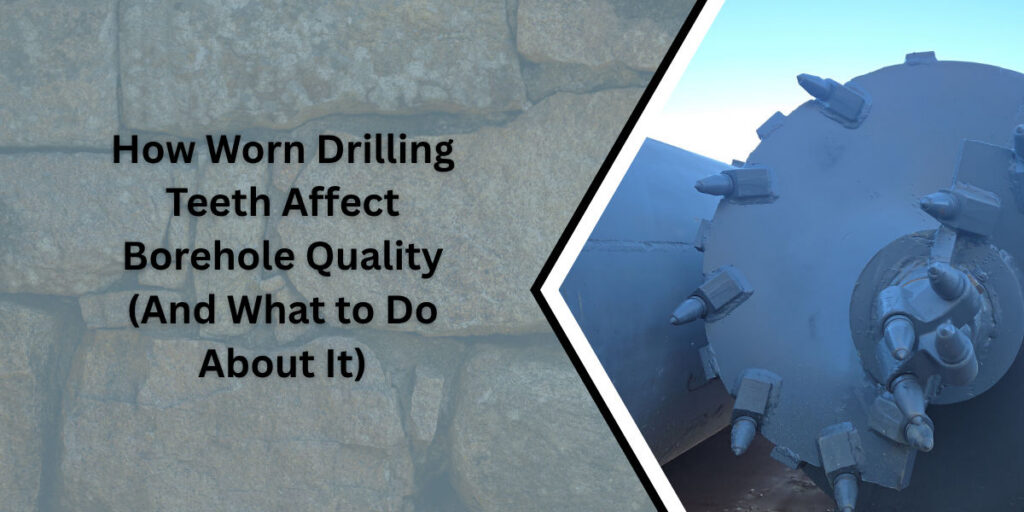
Drilling teeth are a consumable part, and most operators know they need to be replaced eventually. What doesn’t always get enough attention is how much damage worn teeth do before they’re swapped out. A dull or worn tooth doesn’t just slow down penetration rate — it changes the quality of the borehole itself, and that can create problems that follow the project all the way through to the pour.
What Worn Teeth Actually Do to the Borehole
When drilling teeth are in good condition, they cut cleanly and consistently. As they wear down, the cutting action shifts. Instead of shearing through material, worn teeth start to grind and push, which generates more heat, more vibration, and a less defined borehole wall. In softer soils that can mean sloughing. In harder conditions it can mean an irregular diameter that causes issues when it’s time to set casing or place rebar cages.
The rig also works harder to compensate. The rotary system is pulling more load to push through material that sharp teeth would handle easily, which puts additional stress on the gear box, Kelly bar, and drive system. Tooth wear that looks like a minor consumable issue on the surface can quietly accelerate wear across more expensive components.
Conditions That Chew Through Teeth Faster
Not every job is equal on tooling. Abrasive soils like coarse sand, gravel, and decomposed granite wear teeth significantly faster than clay or softer mixed soils. Rock or heavily compacted material takes an even harder toll. If your crew is moving between job types without adjusting inspection frequency, it’s easy to carry teeth that are fine for one condition into a job that’s going to destroy them in a fraction of the time.
Tracking tooth wear by formation type, not just by hours, gives you a much more accurate picture of where you actually stand.
What to Look For During Inspection
A visual check before each shift doesn’t take long and catches most problems before they compound. Look for carbide tips that are cracked, missing, or worn flat. Check the tooth body itself for deformation or breakage at the base. If multiple teeth on the same barrel or auger are showing the same wear pattern, that’s a signal about how the tool is contacting the formation, not just a replacement issue.
Rotating teeth that are supposed to spin freely and aren’t are also worth addressing. A seized tooth drags instead of cuts, and the wear it causes is faster and less predictable than normal use.
Keeping the Right Teeth on Hand
Waiting until teeth are gone before ordering replacements is one of the more expensive habits a drilling operation can have. Running short on a critical job means either pushing worn tooling further than it should go or sitting idle while parts ship. Neither option is good for the project or the bottom line.
Titan Foundation Equipment stocks a wide selection of auger and core barrel teeth sourced directly from the manufacturer, built for demanding conditions and available without the long lead times that come with less stocked suppliers. If you’re not sure what you need or want to make sure you’ve got the right teeth for the work ahead, reach out through our contact page or give us a call at 30-RENT-A-RIG and we’ll get you sorted out fast.