
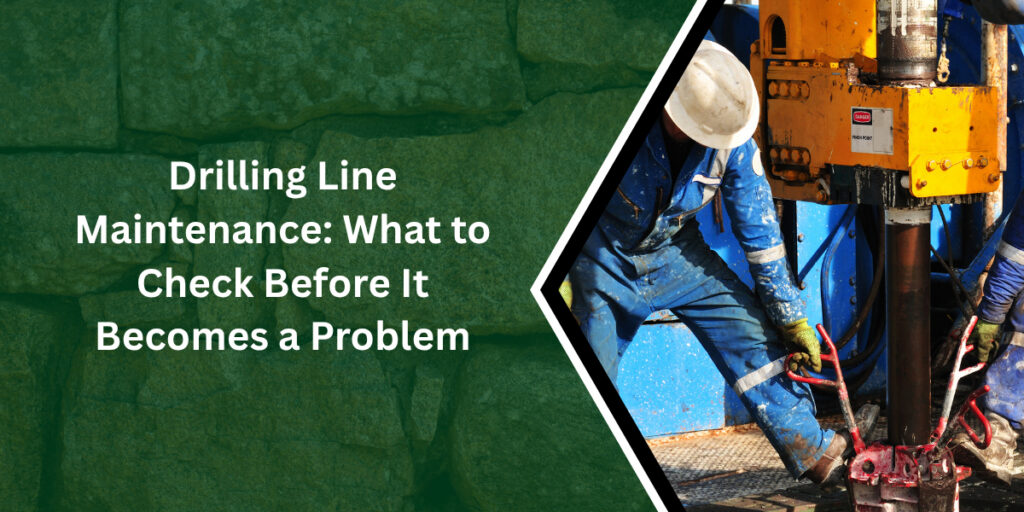
Foundation drilling puts serious demands on every component of a rig, and the drilling line tends to get overlooked until something goes wrong. It doesn’t have the same visibility as a Kelly bar or a gear box, but when it fails, the consequences hit just as hard. A snapped or frayed line mid-operation can mean a stuck tool, a compromised borehole, or worse, a safety incident that shuts the site down entirely.
Regular inspection and maintenance on your drilling lines isn’t complicated, but it has to be consistent.
What You’re Looking For
The first thing to check is wire condition along the full length of the line. Broken wires are the most obvious red flag, but look closely because they don’t always show up in the same spot. A cluster of breaks in a short section of line is a stronger warning sign than isolated breaks spread out across its length. Either way, broken wires mean the line is losing structural integrity and the clock is running.
Corrosion is another problem that develops gradually and gets missed because it hides under surface grime. When you’re cleaning the line or running your inspection, look for rust-colored staining, pitting, or any section where the wire has started to stiffen. A line that doesn’t flex the way it should is a line that’s closer to failure than it looks.
Pay attention to the end connections too. Swaged fittings and sockets take a lot of stress at the attachment points, and that’s often where deterioration shows up first. If a fitting is cracked, corroded, or showing signs of movement, don’t assume it’ll hold through the next job.
Lubrication and Storage
Drilling lines need regular lubrication to stay flexible and resist internal corrosion, especially when they’re working in wet or abrasive conditions. A line that runs dry wears faster from the inside out, and internal damage is nearly impossible to spot during a visual inspection.
How you store the line when it’s off the rig matters just as much. Lines that sit coiled incorrectly or get pinched under other equipment develop kinks that weaken the wire structure at those points. Store them properly and inspect for kinking before putting a line back into service after it’s been in storage.
Replacement Timing
There’s no universal number of hours that tells you when a drilling line needs to go. Replacement depends on usage intensity, soil and rock conditions, and how well the line has been maintained. What matters most is setting a consistent inspection schedule and acting on what you find rather than waiting until something forces the issue.
If you’re running IMT, CZM, Soilmec, or another major brand rig and you’re due for a replacement line or just want to make sure you have the right spec on hand before your next project, Titan Foundation Equipment stocks drilling lines for most major brands. Call us at 30-RENT-A-RIG or reach out through our contact page and we’ll help you get what you need, fast.