
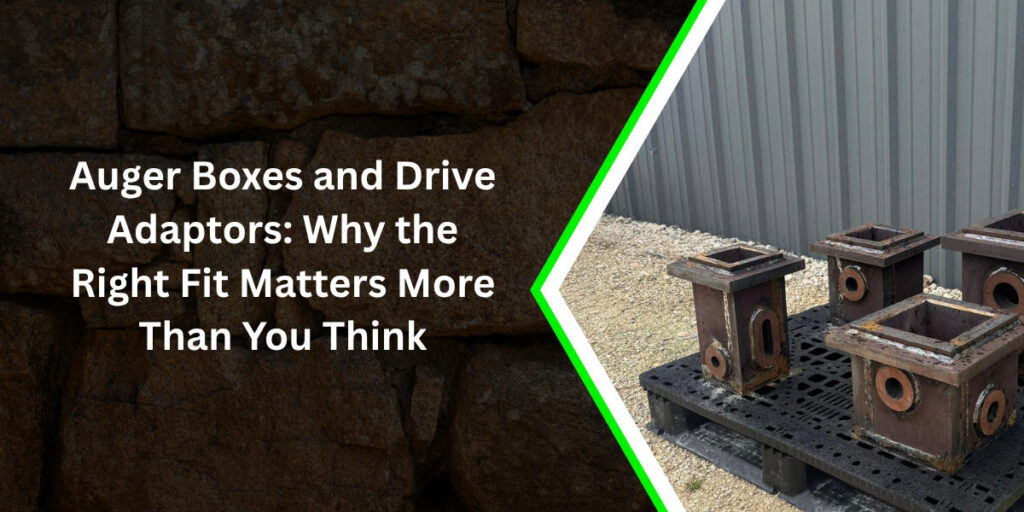
When something goes wrong with an auger box or drive adaptor on the jobsite, the problem usually announces itself in a way that’s hard to miss — a loose connection, a vibration that shouldn’t be there, a tool that isn’t transferring power the way it’s supposed to. What’s less obvious is how often those issues trace back to a fitment problem that was present from the start, or a replacement component that was close enough to work but not right enough to last.
Auger boxes and drive adaptors are the connection between the rig’s rotary system and the tooling in the ground. That connection point takes on significant stress during every drill cycle, and when it isn’t right, the consequences spread across the whole tool string.
What an Auger Box Actually Does
The auger box sits between the Kelly bar drive and the auger, transmitting the rotary torque from the rig’s drive system down into the cutting tool. It sounds straightforward, but the forces involved are substantial, and the auger box has to handle them consistently across varying soil conditions, rotation speeds, and tool weights. A well-matched auger box absorbs and transfers that load efficiently. One that isn’t properly suited to the rig or the tooling becomes a stress concentration point, and wear accelerates from there.
Drive adaptors serve a related function, bridging the connection between components that weren’t originally designed to work together — different Kelly bar sizes, different tool mounting configurations, or mixed equipment from multiple manufacturers. They’re practical solutions for expanding the versatility of a rig’s tooling inventory, but they only work as intended when the adaptor is built to the right specifications for the application.
Where Fitment Problems Start
The most common fitment issues come from one of two places: using a component that was designed for a different rig model, or sourcing a replacement that approximates the original rather than matching it. In both cases, the connection works under light conditions and starts showing problems when the rig is pushed harder — in tougher formations, at higher torque demands, or over extended drilling cycles.
Play or looseness in the auger box connection is one of the earliest signs something isn’t matched correctly. It may feel minor at first, but that movement under load cycles creates wear at the contact surfaces that compounds over time. The tooling doesn’t track as cleanly, the borehole quality suffers, and eventually the connection fails at a point in the job when a failure is most disruptive.
Compatibility Across Rig Brands
Contractors running mixed fleets or older equipment face a more complex fitment challenge. An IMT rig, a CZM, and a Soilmec unit on the same yard may share some compatible tooling, but auger box and drive adaptor specifications don’t always cross over cleanly between brands or model generations. Getting a correct fit requires knowing not just the tool dimensions but the torque ratings, drive configurations, and Kelly bar specifications for the specific rig involved.
This is where sourcing from a supplier who understands the equipment matters. A part that fits physically but isn’t rated for the torque output of the rig it’s going onto isn’t a solution — it’s a problem that hasn’t happened yet.
Custom Solutions When Off-the-Shelf Doesn’t Cut It
Not every application fits neatly into a standard catalogue option. Titan Foundation Equipment builds and sources auger boxes and drive adaptors for a wide range of rig configurations, including custom solutions for applications where a standard component isn’t the right answer. Whether you’re working with IMT, CZM, Soilmec, or another major brand, getting the connection between the rig and the tooling right from the start saves time, reduces wear, and keeps the tool string performing the way it should through the life of the project.
If you’re dealing with a fitment issue, sourcing a replacement, or planning ahead for an upcoming job, give us a call at 30-RENT-A-RIG or reach out through our contact page and we’ll help you get the right component for your rig.